Six thousand years of continuous habitation on one mound, and the bazaar below that is still gloriously, stubbornly alive.
Eight Thousand Years on One Mound
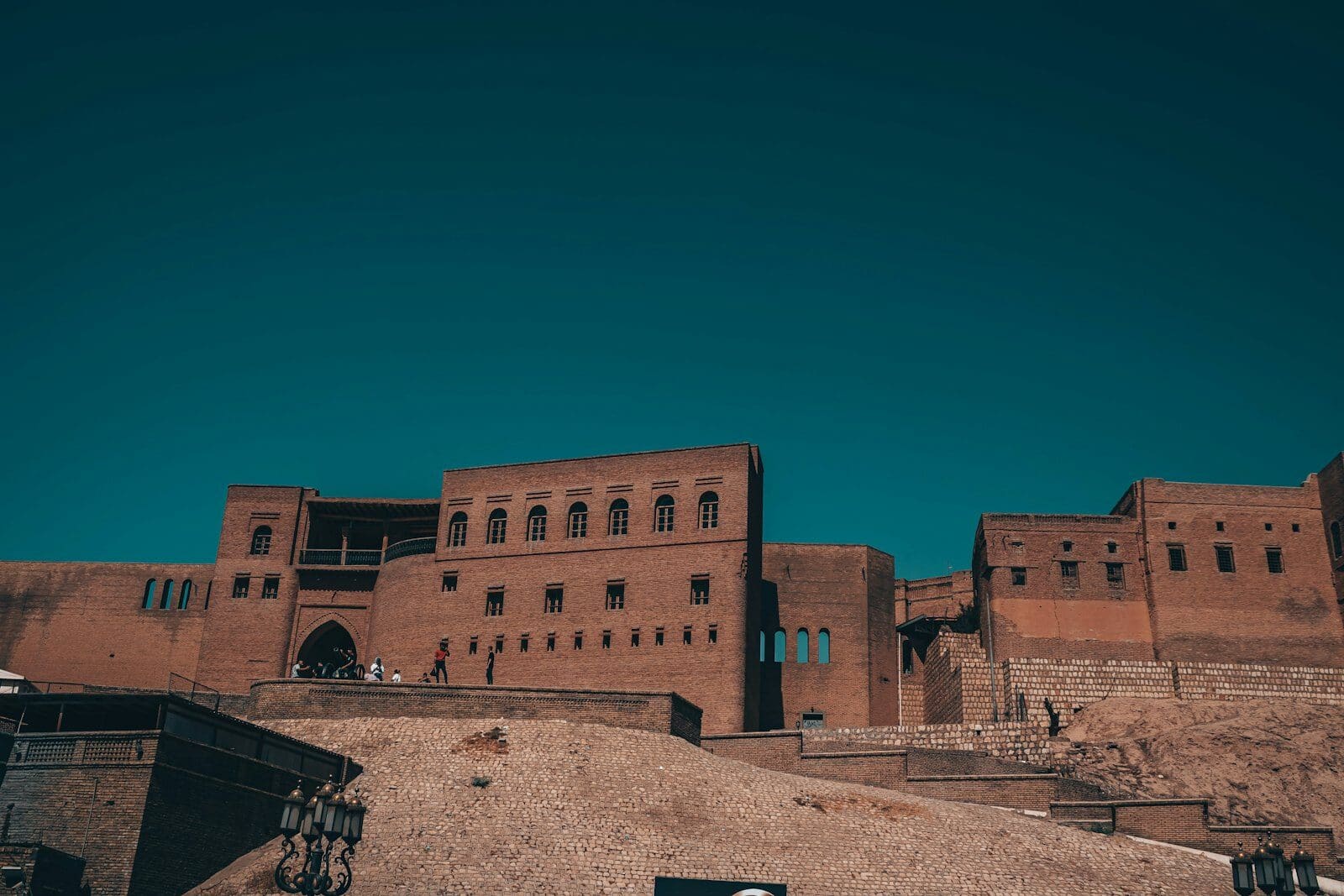
Erbil Citadel does not sit on a hill. The hill is the citadel. Generations built, collapsed, and rebuilt on the same mound for at least six thousand years, some say eight, until the whole mound became a layered city, ringed by walls, crowned with a maze of alleys and courtyard houses. The citadel covers approximately 102,000 square metres and rises 25 to 30 metres above the surrounding plain. Archaeological excavations have revealed layers of occupation dating back to the 5th millennium BCE, making Erbil one of the oldest continuously inhabited sites on earth. The citadel was inscribed as a UNESCO World Heritage Site in 2014, recognized for its outstanding universal value as a testament to continuous human settlement over eight millennia.
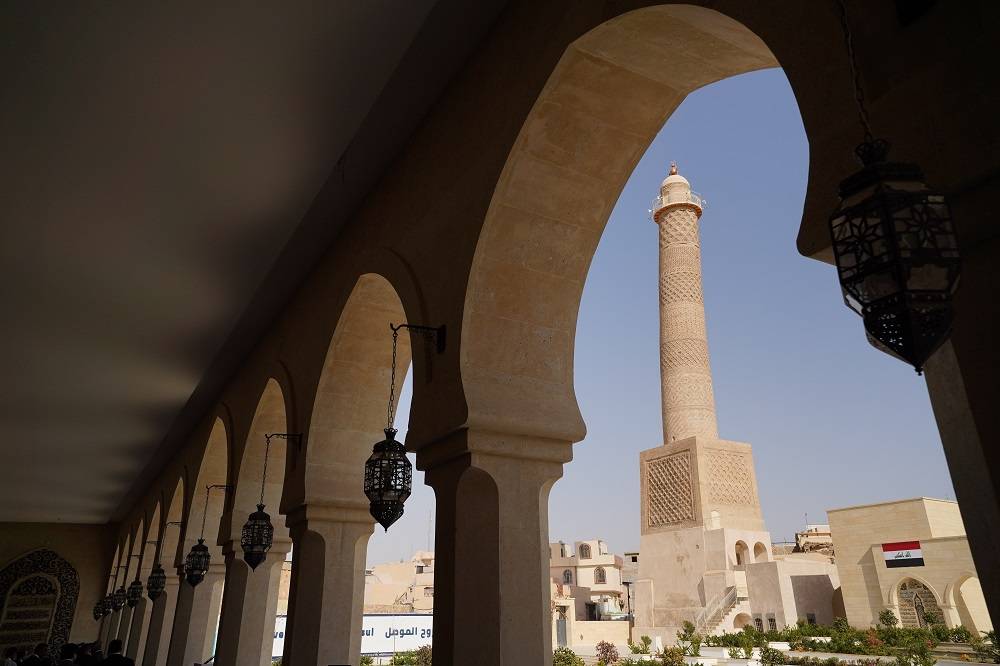
From the top, the view is the story of Iraq in one glance: the bazaar spreading below, the mountains of Kurdistan blue on the horizon, and the minaret of the Mudhafaria rising beside the mound like a cousin of Samarra's spiral. The citadel's three surviving gates, the Badik, Topkhana, and Qaysari, each lead to different parts of the old city. The northern gate opens onto a plaza where families gather in the evenings. The eastern gate leads to the Qaysari Bazaar. The western gate connects to the residential quarters, where restoration work has been ongoing since 2006 under the UNESCO and Iraqi government partnership.
The Kurdish Sun
The citadel is the heart of Erbil, and Erbil is the heart of Iraqi Kurdistan. Above its gates, the Kurdish sun, a radiant disk of twenty-one rays, remembers the ancient sun worship of the Medes. The old city is a place where that memory is still worn, still spoken, still poured into glasses of tea. The Kurdish people have lived in these mountains for millennia. Their language is Indo-European, not Semitic, closer to Persian than to Arabic. Their culture is distinct: music, food, dress, and social customs that are recognizably different from Arab Iraq. The Kurdish New Year, Nowruz, is celebrated on 21 March with fires, dancing, and feasting across Kurdistan.
Wandering the Qaysari Bazaar
Descend from the citadel and you step into the Qaysari Bazaar, where textile dyers hang bolts of cloth over the walkways like flags. The smell of cardamom and leather mixes with the sound of bargaining in three languages. It is one of the oldest market streets in the world, and it remains gloriously, stubbornly alive. The bazaar stretches from the citadel's eastern gate down into the modern city, a continuous commercial corridor that has been operating for centuries. Traditional copper workers, spice merchants, fabric sellers, and goldsmiths line the narrow alleys. The bazaar is not a tourist attraction. It is the commercial heart of Erbil, where locals shop for everything from clothing to electronics to fresh produce.
"A city that has been inhabited continuously for six thousand years has learned something about hospitality." - Ali Jasim, on Erbil
Erbil as Gateway
Erbil is the natural gateway to Iraqi Kurdistan. The city has its own international airport with direct flights from Dubai, Istanbul, London, and other major cities. The roads from Erbil lead to the mountains of Kurdistan, the lakes of Dukan and Darbandikhan, and the ancient sites of northern Iraq including Hatra, Ashur, and Mosul. Erbil itself is a modern city with a population of approximately 1.5 million, but the citadel at its center anchors it to a past that stretches back to the beginning of urban life. The contrast between the ancient mound and the modern city that surrounds it is one of the things that makes Erbil compelling. It is not a city that preserved its past. It is a city that was built on top of it, layer by layer, for eight thousand years.
Practical Notes
- Access: Erbil International Airport is the main gateway, with direct flights from Dubai, Istanbul, London, and other cities. The Iraqi Kurdistan Trek begins and ends in Erbil. The Northern Odyssey and UNESCO Heritage tours also use Erbil as a base.
- Best time: September through November (autumn) and March through May (spring). The citadel is pleasant year-round, but the mountain excursions beyond Erbil are best in these seasons.
- Visa: Kurdistan has its own e-visa system via visit.gov.krd, separate from the federal Iraq e-visa. Many nationalities can get a visa on arrival for Kurdistan specifically.
- Combine with: The Qaysari Bazaar (directly below the citadel), the Mudhafaria Minaret (10-minute walk), and the modern Erbil city center. The Kurdistan Trek uses Erbil as the starting point for multi-day mountain walks.